Start with three separate axes
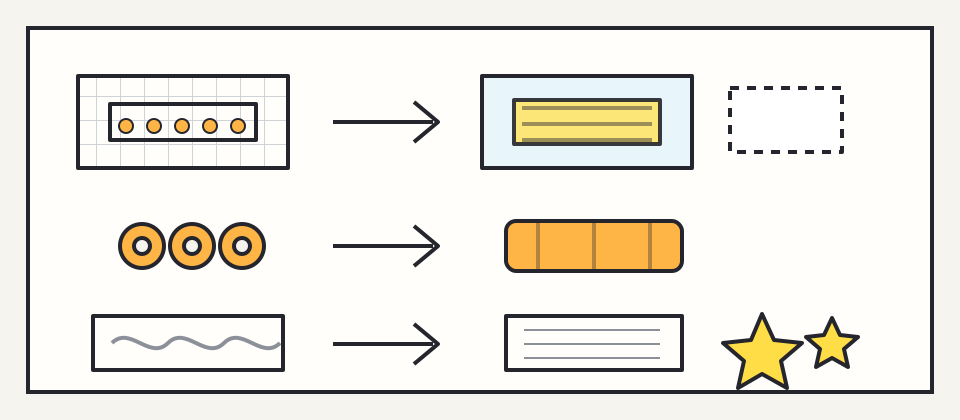
Names such as standard ironing, tape method, towel ironing, flat fusing and glitter-bead fusing do not describe one single category. A clearer model has three axes. The first axis is how the beads are held: iron directly on the pegboard, or move the design off the board with tape. The second is how far the beads fuse: light open-hole fusing, or flat fusing until holes nearly close. The third is the surface effect: normal paper finish, cloth texture, towel or bath-towel texture, glitter finish, one textured side or two flatter sides. So the real question is not which method is best. It depends on whether you are making a charm, coaster, display piece, large panel, or a design that should keep a strong pixel-bead texture.
Standard paper-covered ironing
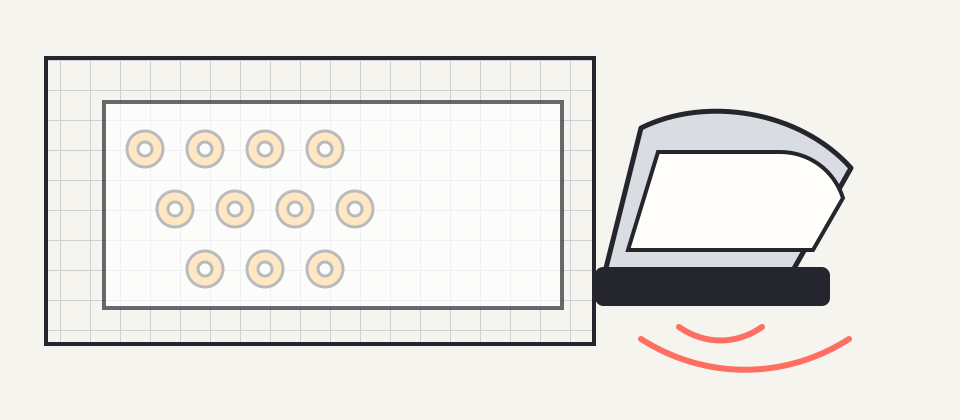
Standard paper-covered ironing is the safest default. Keep the design on the pegboard, cover the beads with ironing paper or parchment, then press with a medium-heat iron while moving gently. Stop and check when the bead tops begin to connect. Official instructions from Perler, Hama and Artkal all follow this same core logic: always use paper between iron and plastic, do not let the iron touch beads directly, do not hold the iron still in one spot, and let the piece cool flat before handling it. Small designs, first attempts and everyday charms should start here. It is predictable and low-risk, but large projects can still suffer from board seams and heat-warped pegboards.
Light fuse, flat fuse, one side, two sides
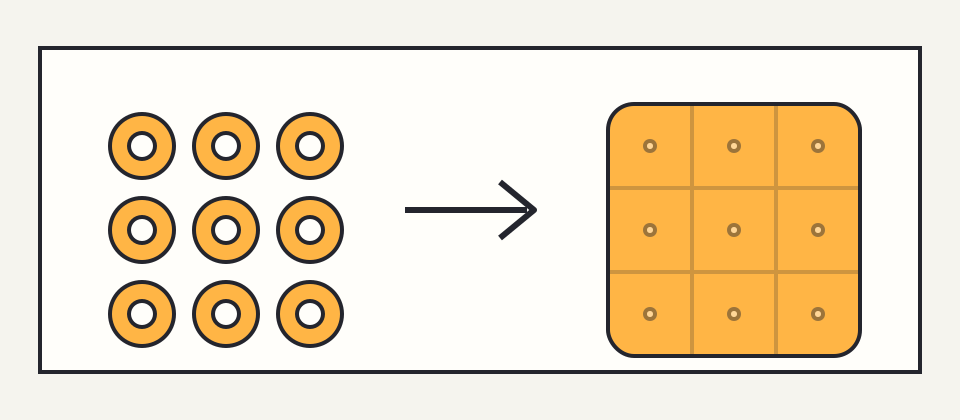
Light fuse, flat fuse, one-sided and two-sided fusing describe how far you melt the beads and which side you fuse. Light fuse / open-hole finish: the bead holes remain visible and the work keeps its bead texture. It is good for decorative charms and designs where the pixel look matters. The tradeoff is lower strength, especially around edges. Flat fuse / closed-hole finish: keep heating until holes shrink or nearly close. The piece becomes stronger and more plastic-sheet-like, useful for coasters, magnets and items that get handled often. The tradeoff is softer detail and a higher risk of warping. One-sided fusing is quick and leaves the back textured. Two-sided fusing sets one side, flips the piece, then fuses the back for better strength.
Tape method for large projects
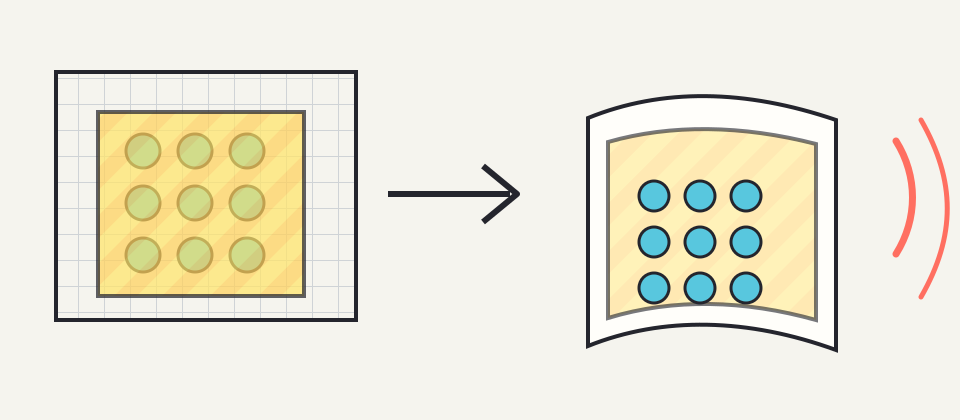
The tape method means covering the bead face with low-tack masking tape, paper tape or painter's tape, lifting the whole design off the pegboard, then ironing it on a heat-safe surface through paper. It is especially useful for large projects. Ironing across several connected pegboards can create uneven pressure at seams, and heat can warp plastic boards. Perler also presents the tape method as a large-project solution: move the design off the boards before applying heat. Two cautions matter: do not iron directly on the tape side, and expect extra prep time. For very large pieces, some makers poke vent holes through the tape to reduce trapped steam and bubbling. Small pieces usually do not need that much work.
Towel, cloth and bath-towel texture fusing
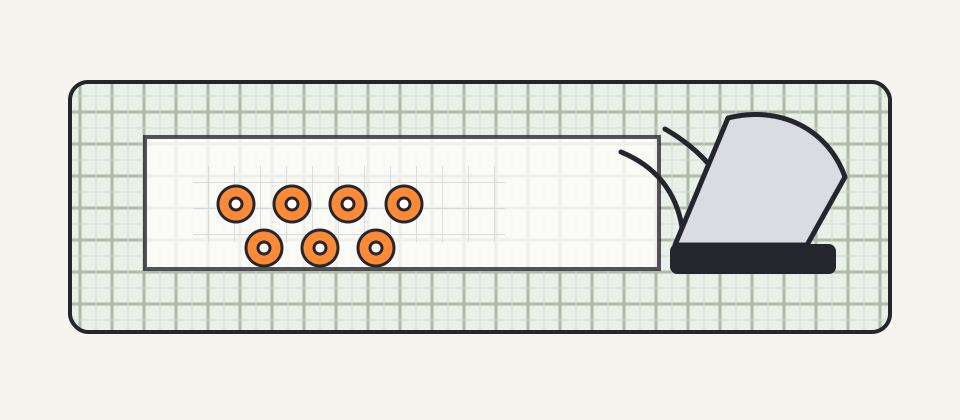
Towel ironing, cloth texture and bath-towel texture are not official brand-standard methods. They are maker shorthand for surface treatment. The shared idea is using fabric or a soft pad to change pressure and surface texture. Towel ironing usually aims for softer pressure and a more matte finish. Cloth texture uses cotton weave to reduce the glossy paper look. Bath-towel texture is stronger and can leave a more obvious dotted or mesh-like surface. There are many variables: fabric thickness, moisture, weave, pressure and iron temperature all change the result. Do not try it first on a finished large piece. Test on a 5x5 or 10x10 scrap sample, and always keep heat-safe paper between the iron and beads.
Glitter fabric fusing: a surface lamination step
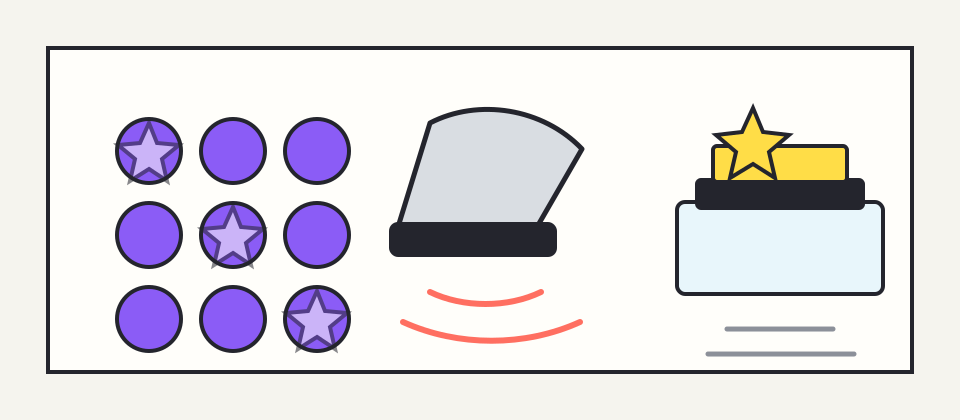
More precisely, the maker term often translated as glitter fusing should not be treated as another basic fuse level like light fusing or flat fusing. It is better understood as a surface lamination step after the bead piece has already been fused. Makers first secure the bead work with a standard method, then layer glitter fabric, sparkle film or a similar transfer material on top, cover it with paper, and press briefly at low heat with an iron or heat press. This solves surface finish, not structural strength. The bead piece still needs standard fusing, two-sided fusing or back-side reinforcement for durability; the glitter layer is there for sparkle, matte shimmer or foil-like texture. The difficult part is the narrow heat window. Too much heat can blur, shrink, release glue or destroy the texture; too little heat will not bond. Test with the same bead brand and the same transfer material first, then record temperature, time, pressure and cooling method before using it on the finished piece.
Clear, glossy, wrinkled, paper-grain and scale effects
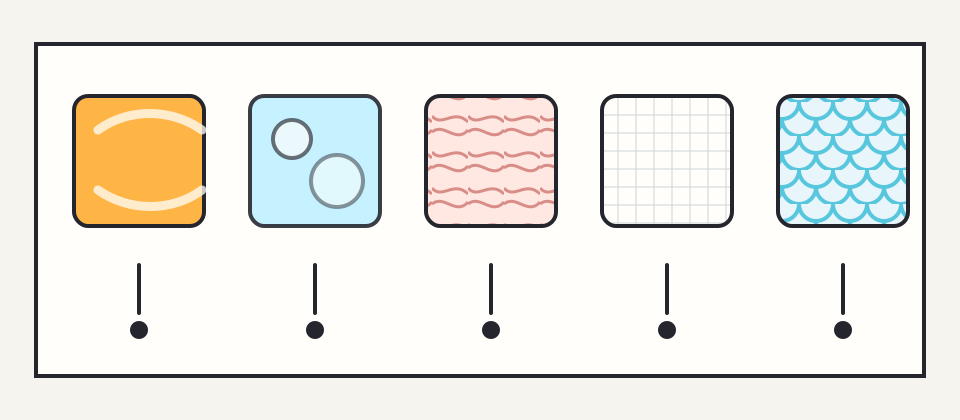
Some maker terms are really surface-effect fusing styles. Clear fusing tries to preserve the transparent look of clear beads. Glossy fusing aims for a shinier front. Wrinkled fusing uses paper texture or heat shrink behavior to create irregular marks. Paper-grain fusing keeps a subtle paper texture. Scale-effect fusing tries to create a fish-scale or layered surface. These are not beginner requirements, and most brands do not document them as official methods. They depend on a specific paper, cloth, pad, pressure and temperature combination, so repeatability is weaker than standard paper-covered ironing. Treat them like experiments: make a scrap sample with the same beads, record the heat setting, seconds per pass, cooling pressure, and the exact paper or texture material. Only move to the real project after the sample is stable.
How to choose
Everyday charms: standard paper-covered ironing plus light two-sided fusing. Keep the holes visible while making the piece strong enough. Coasters, magnets and handled items: two-sided fusing, with the back fused a little flatter for strength. Large panels: tape method first. Move the project off the pegboard to reduce seams and board warping. Soft texture: test towel or cloth texture on scrap beads. For a stronger texture, test bath-towel texture on a small sample first. Glitter fabric, sparkle film or other surface effects: fuse the bead piece first, then test the transfer material on a scrap sample before applying it to the finished work. The reliable rule is simple: secure the design, use paper, use lower heat with multiple passes, and cool it flat. Change one variable at a time so you know what actually improved the result.